February 11, 2026 · 3 min
Uncovering Hidden Cervical Spine Injuries in Pediatric Patients
← All articles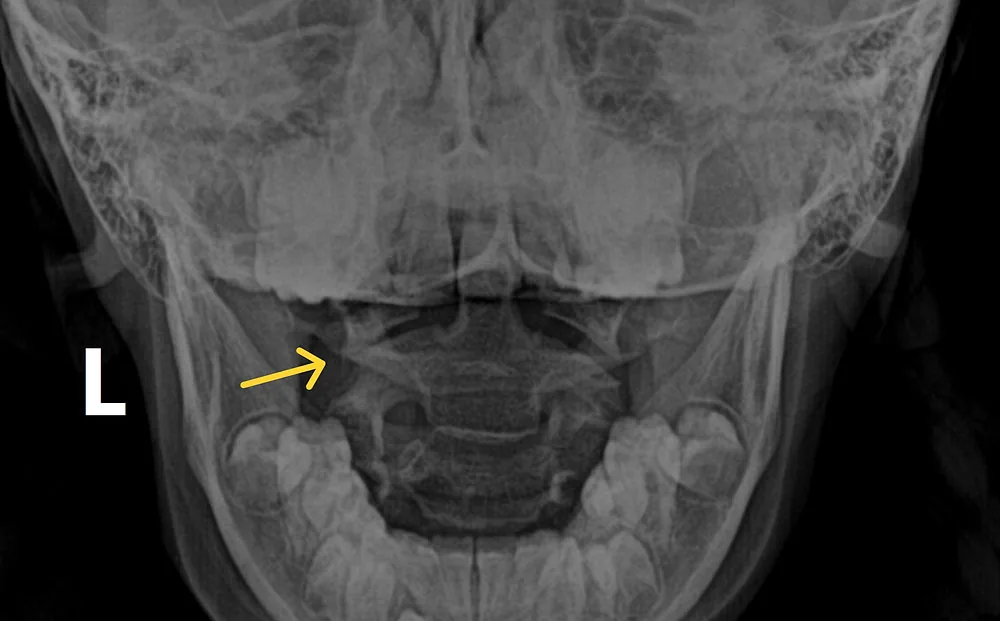
This case study highlights an 8-year-old female patient presenting with progressively worsening headaches, underscoring the critical role of thorough diagnostic protocols in pediatric populations. Such approaches can reveal longstanding injuries that might otherwise remain undetected until adulthood, potentially leading to chronic health complications.
Patient Presentation and History:
The patient, a 8-year-old girl, reported a gradual onset of headaches that had intensified over the preceding year, culminating in daily occurrences. These headaches were described as persistent and debilitating, interfering with her daily activities, school performance, and overall quality of life. Initial consultations explored potential triggers, including environmental factors, dietary influences, and stress; however, no immediate causative elements were apparent from the history alone. The patient's parents noted no recent trauma, but recalled minor incidents from early childhood, such as falls during play, which had not prompted medical attention at the time.
I want to be clear, this is no fault to the parents or parents of children with similar cases. This is merely part of an active child's life living in the rural foothills of Maine. What may appear as a benign, meaningless bump & bruise (i.e slip and fall on the ice) is ultimately an inevitable occurrence especially living on a family farm, participating in outdoor recreational activities during all 4 seasons, living in Maine, etc.
Diagnostic Findings:
A full spinal X-ray examination was conducted as part of a standard Gonstead assessment protocol. This revealed significant degeneration in the left atlanto-axial joint (C1-C2), indicative of an injury likely sustained at least three years prior as indicated by the degree of joint degeneration. The radiographic images demonstrated asymmetrical wear and misalignment, with evidence of joint space narrowing and sclerotic changes on the affected side. These findings suggest a prior trauma to the area that and compensatory adaptations in the cervical spine have ensued thereafter which can contribute to neurological irritation, vascular compromise, or muscular tension-common precursors to recurrent headaches. The X-ray series included lateral and anteroposterior views of the cervical, thoracic, and lumbar regions, providing a holistic view of spinal alignment. Notably, the cervical images highlighted the atlanto-axial asymmetry, a subtlety that might be overlooked in less detailed imaging protocols. This degeneration, while advanced for the patient's age, aligns with patterns observed in unresolved pediatric traumas, where the developing skeletal system adapts but does not fully heal without intervention.
Secondarily, a posteriorly displaced 2nd sacral tubercle is also noted on the lateral x-ray. This is a very common finding in pediatric patients as the sacrum is fully segmented making it susceptible to specific, segmental misalignment. A slip and fall of any kind while landing on your butt or back is most common cause of this. This is much easier to address now before the patient reaches skeletal maturity and the sacrum completely fuses into one solid bone, typically by mid-20's.
The Gonstead Examination Process:
The Gonstead system emphasizes a meticulous, multi-faceted evaluation to pinpoint subluxations and biomechanical dysfunctions. This includes static and motion palpation, visualization, instrumentation (thermography readings), and full-spine radiography. In this case, the X-ray analysis was pivotal, as it illuminated a historical injury that palpation alone might not have fully characterized. By integrating these elements, practitioners can develop targeted adjustment strategies that address the root cause rather than merely alleviating symptoms. This thoroughness is particularly vital in pediatric care, where children may not articulate discomfort effectively, and symptoms like headaches can be dismissed as transient or developmental. Without this, underlying issues often persist undetected through early years, only becoming evident when physical, academic, or emotional demands escalate. Early intervention through Gonstead protocols can prevent escalation, promoting optimal neurological function and structural integrity.
Addressing a Common Misattribution in Female Patients:
In adolescent and pre-adolescent girls, headaches are frequently attributed to hormonal fluctuations associated with the onset of menstrual cycles. While hormonal changes can indeed act as triggers, exacerbating vascular or neurological sensitivity, they are seldom the primary etiology. In this patient's case, the cervical degeneration predated any pubertal developments, illustrating how structural issues can underlie symptom presentation. Blaming hormones without investigating biomechanical factors risks delaying appropriate care, potentially leading to prolonged suffering or secondary complications such as migraines, postural imbalances, or even cognitive impacts. This often leads the patient down a long term pharmacological treatment plan that simply misses the mark. Clinicians must advocate for comprehensive assessments differentiating between triggers and causes.


